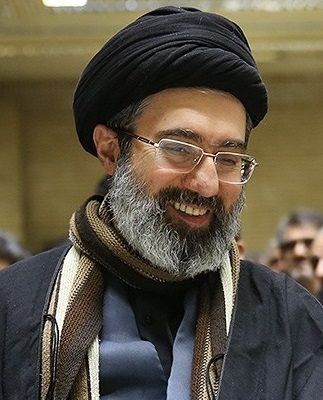
Decapitation Strike: How Mojtaba Khamenei's Death Reshapes Iran
The Islamic Republic of Iran is reeling from an unprecedented blow following the confirmed death of Mojtaba Khamenei, the powerful second son of Supreme Leader Ali Khamenei. On February 28, 2026, a massive precision strike targeting a leadership compound in Tehran shattered not only the physical structure but also the very foundations of Iran's established power dynamic. This event, characterized by Western intelligence agencies as a "decapitation strike," has obliterated the carefully cultivated hereditary succession plan, plunging the nation into an acute state of uncertainty and power struggles. The demise of a figure as influential as Mojtaba Khamenei signals a seismic shift, fundamentally reshaping the political landscape of a critical global player.
The Fall of a Shadow Prince: Mojtaba Khamenei's Ascendance and Influence
Born in Mashhad in 1969, Mojtaba Hosseini Khamenei emerged from a clerical family steeped in revolutionary fervor. His father, Ali Khamenei, rose to prominence following the 1979 Islamic Revolution, eventually becoming Iran's second Supreme Leader. This upbringing placed Mojtaba at the nexus of power from a young age, allowing him to cultivate deep connections within the regime's most critical institutions. From 1987 to 1988, he served in the Iran–Iraq War, gaining valuable military experience and forging alliances that would prove crucial to his later influence.
While largely operating outside the public spotlight, Mojtaba Khamenei was widely acknowledged as the most influential and powerful figure behind the scenes in Iran. His control extended over significant portions of the Islamic Revolutionary Guard Corps (IRGC) and the intelligence apparatus – the very pillars of the regime's authority and internal security. Furthermore, he reportedly took direct control of the Basij, a paramilitary volunteer militia instrumental in suppressing dissent, particularly during the protests following the contentious 2009 elections. This level of influence, often exerted from the shadows, led many to view him as a potential successor to his aging father, despite a decline in this likelihood following the 2022 anti-government protests. For years, the question of Mojtaba Khamenei's political robustness, his 'gesund' status (meaning sound or healthy) in the corridors of power, was a central, albeit whispered, inquiry among those observing Iran, reflecting the immense weight he carried. His ability to consolidate loyalist factions and command respect, often through fear, made him an indispensable component of the Khamenei family's enduring grip on power. His story, a deep dive into how power is wielded away from public scrutiny, can be further explored in
Mojtaba Khamenei: The Shadow Power Behind Iran's Turmoil.
The Decapitation Strike: A Precision Blow to Iran's Leadership
The events of February 28, 2026, mark a turning point in Iran's modern history. Multiple precision-guided munitions, part of a joint U.S.-Israeli opening salvo, targeted the leadership compound in Tehran. The attack was not indiscriminate; it was a surgical strike aimed at the very heart of the Iranian regime's command and control structure. Reports confirm that Mojtaba Khamenei was in the same secure bunker as his father, Ali Khamenei, at the moment of impact. Neither survived.
The casualties extended beyond the Khamenei family, with several other high-ranking generals also reportedly eliminated in the strike. This coordinated attack goes far beyond a mere military action; it represents a strategic effort to destabilize the existing clerical establishment by removing its most central figures. The deliberate targeting of the Supreme Leader and his most powerful son signifies an intent to dismantle the existing power structure from the top down, leaving a void designed to be filled by chaos and internal strife.
The End of a Dynasty: Iran's Succession Crisis Unfolds
With Mojtaba Khamenei gone, the meticulously crafted hereditary succession plan, which had been quietly developing for over a decade, lies in ruins. The death of Ali Khamenei already presented an immense challenge, but the simultaneous elimination of his most influential son, the de facto orchestrator of loyalty among the Basij and Revolutionary Guard, creates an unprecedented power vacuum. There is no clear "Khamenei" heir remaining capable of consolidating the disparate loyalist factions and maintaining the cohesive, albeit iron-fisted, control the family once wielded.
The newly formed Interim Council finds itself in an incredibly precarious position. Hardline factions within the Assembly of Experts, the body constitutionally tasked with selecting the next Supreme Leader, are reportedly struggling to identify a replacement who commands anything close to the level of fear and respect that the Khamenei family enjoyed. The previous succession plans hinged on Mojtaba's deep connections and proven ability to manage complex power dynamics. His absence leaves a void that cannot be easily filled by traditional clerical mechanisms alone, especially given the immediate need for a strong, unifying figure amidst widespread instability. The profound implications of this event on Iran's future are further detailed in
Mojtaba Khamenei Dead: Iran's Hereditary Succession Ends.
Aftershocks and Future Scenarios: A Nation at a Crossroads
The situation in Tehran remains highly volatile. Reports of sporadic clashes between different security factions have surfaced, indicative of the struggle for internal control that has now begun in earnest. The "decapitation strike" has not only removed the head of the clerical structure but has also severed the intricate web of personal loyalties and institutional control that held the regime together.
What comes next for Iran is a complex and potentially dangerous array of scenarios:
*
Protracted Internal Conflict: The absence of a clear leader could lead to extended infighting among various factions of the IRGC, Basij, and different clerical groups. Each faction may attempt to assert dominance, leading to further instability and violence.
*
Rise of a New Strongman: In times of chaos, strong military or intelligence figures often emerge to fill the power vacuum. This could lead to a more overtly militarized leadership, potentially shifting Iran's geopolitical stance.
*
Increased Popular Unrest: With the regime's core weakened and its ability to suppress dissent potentially compromised, there is a risk of widespread popular protests or even a renewed revolutionary movement. The long-simmering discontent among the Iranian populace could explode, fueled by the perception of the regime's vulnerability.
*
Shifting Regional Alliances: Iran's external policies and alliances could undergo significant changes depending on who eventually takes power. This has profound implications for regional stability, particularly concerning its proxies and adversaries.
Key Factors to Watch:
1.
The Assembly of Experts' Deliberations: Who they put forward, and how swiftly, will be crucial.
2.
IRGC Unity: Any signs of division within the Revolutionary Guard will amplify the internal power struggle.
3.
Public Reaction: The extent and nature of public demonstrations will indicate the regime's control or lack thereof.
4.
Foreign Intervention/Influence: External actors will undoubtedly attempt to shape the unfolding events.
This is not merely a leadership change; it is the destruction of a dynastic intention and the shattering of the existing order. The political 'health' or 'gesund' status of the Iranian regime itself is now in critical condition, facing its most profound existential crisis since its inception.
Conclusion
The death of Mojtaba Khamenei, alongside his father, Ali Khamenei, in the February 28, 2026, precision strike marks an irreversible turning point for Iran. The "shadow prince" who meticulously controlled vast portions of the nation's security and intelligence apparatus, and who embodied the future of a hereditary succession, is gone. This decapitation strike has not only created an immediate power vacuum but has also dismantled the carefully constructed mechanisms of control that sustained the Islamic Republic for decades. As factions vie for control amidst unprecedented chaos, the world watches an Iran at a perilous crossroads, where the future of its clerical structure, regional role, and national stability hangs precariously in the balance. The long-term consequences of this monumental event will undoubtedly resonate for years to come, signaling the potential for a fundamentally transformed Iran.