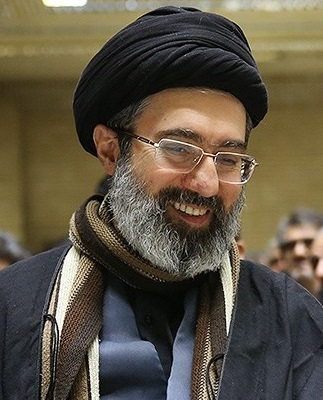
Mojtaba Khamenei: The Shadow Power Behind Iran's Turmoil
For decades, Iran's political landscape has been dominated by a select few, with the Supreme Leader, Ali Khamenei, at its apex. Yet, behind the public pronouncements and official ceremonies, a more clandestine power operated: Mojtaba Hosseini Khamenei. Often described as the "shadow power" or the "kingmaker," Mojtaba, the Supreme Leader's second eldest son, wielded immense influence from behind the scenes, shaping critical decisions and managing key instruments of the state. His mysterious persona, coupled with the immense sway he held over crucial security apparatuses, made him a figure of both fascination and fear. For years, questions surrounding figures like Mojtaba Khamenei – including aspects of his influence, his public appearances, and even his personal well-being – were shrouded in secrecy, fueling endless speculation about his true status and power.
However, the enigmatic curtain around Mojtaba was dramatically torn away with the shocking news of his confirmed death following a massive precision strike on Tehran on February 28, 2026. This event didn't just mark the end of a powerful individual; it signaled the collapse of a carefully orchestrated dynastic succession plan and plunged the Islamic Republic into unprecedented turmoil. Understanding Mojtaba Khamenei's role is crucial to comprehending the profound shifts now unfolding in Iran.
The Architect of Influence: Mojtaba Khamenei's Rise to Shadow Power
Born on September 8, 1969, into a prominent clerical family in Mashhad, an important religious center, Mojtaba Khamenei's destiny was intertwined with the burgeoning Islamic Revolution. His father, Ali Khamenei, was a key activist who supported the overthrow of the Shah in the 1970s and became an influential figure in the Islamic Republic upon its establishment in 1979. This lineage immediately placed Mojtaba within the inner sanctum of power, a position he would expertly leverage throughout his life.
Mojtaba's early life included service in the Iran-Iraq War from 1987 to 1988, an experience that would undoubtedly forge deep connections within the military and security establishment. However, his true ascendancy began not on the battlefield, but within the secretive corridors of the Office of the Supreme Leader. Operating largely outside of public view, Mojtaba meticulously built a formidable power base. He was widely reported to have taken effective control of the Basij, the notorious paramilitary organization used to suppress dissent, most notably during the protests over the 2009 election. This demonstrated his ruthless pragmatism and his vital role in safeguarding the regime.
Beyond the Basij, Mojtaba was understood to control significant portions of the Islamic Revolutionary Guard Corps (IRGC) and the intelligence apparatus. This direct command over Iran's most formidable security and intelligence forces made him an indispensable pillar of the regime's stability and suppression capabilities. His ability to move resources, direct operations, and influence appointments made him the single most powerful figure behind the scenes, effectively an unacknowledged co-ruler, ensuring the continuation of his father's policies and protecting the family's hold on power.
Insight: In authoritarian systems, shadow figures like Mojtaba Khamenei often serve as critical intermediaries, insulating the supreme leader from direct responsibility for unpopular or brutal actions while ensuring unwavering loyalty within the ranks. This setup creates a complex web of patronage and fear, making their removal an existential threat to the regime's operational capacity.
The Dynastic Ambition: A Successor in Waiting?
For over a decade, Mojtaba Khamenei was not merely a powerful advisor; he was widely considered the most influential son of Ali Khamenei and, more critically, a strong contender to succeed his father as Supreme Leader. This implied a quiet, yet determined, hereditary succession plan being cultivated within the Islamic Republic – a stark contrast to the revolutionary ideals of its founding.
The notion of dynastic continuity, even in a system born from revolution, highlights the pragmatic survival instincts of the ruling elite. Mojtaba’s deep connections within the Basij and the Revolutionary Guard were not just about maintaining control in the present; they were crucial for consolidating loyalist factions in the event of a succession. His command over these forces was seen as the guarantor of a smooth, family-led transition.
While his likelihood of succession had reportedly declined somewhat after the widespread antigovernment protests in 2022, primarily due to public resentment against the clerical establishment, the underlying ambition and the structural preparations remained firmly in place. Hardline factions within the Assembly of Experts, the body theoretically responsible for choosing the next Supreme Leader, were heavily influenced by the Khamenei family's network. Mojtaba's continued presence meant that any potential challengers would face an uphill battle against a candidate backed by the most formidable elements of Iran's security state.
Practical Tip: Understanding the dynamics of succession in closed political systems like Iran involves looking beyond official titles. The real power often lies with those who control the security apparatus and command the personal loyalty of key military and intelligence figures, as Mojtaba Khamenei demonstrably did. This insight is crucial for predicting potential future power struggles.
The Strike that Shook Tehran: The End of an Era
The carefully constructed edifice of Mojtaba's power and the dynastic aspirations it supported were shattered on February 28, 2026. News confirming the death of Mojtaba Khamenei emerged after a devastating "massive precision strike" on a leadership compound in Tehran. This was no ordinary attack; it was characterized by Western intelligence agencies as a "decapitation strike," a targeted blow aimed at crippling the very head of the regime's leadership.
Reports indicated that Mojtaba was in the same secure bunker as his father, Ali Khamenei, at the time of the impact. Neither survived. This joint U.S.-Israeli opening salvo not only removed the Supreme Leader but also eliminated his most powerful son and presumed successor in one fell swoop. The strategic implications were immediate and profound. The death of Mojtaba Khamenei meant the destruction of the hereditary succession plan that had been quietly developed for over a decade. With him gone, there was no clear "Khamenei" heir remaining to consolidate the loyalist factions of the Basij and the Revolutionary Guard, leaving a gaping void at the heart of the Islamic Republic's future leadership. To learn more about how this event reshaped the country, read Decapitation Strike: How Mojtaba Khamenei's Death Reshapes Iran.
This strike was not just a tragic family loss for the regime; it was a fundamental alteration of Iran's political trajectory, removing the very figures who had ensured its continuity and stability through fear and patronage. The immediate aftermath in Tehran was chaotic, with reports of sporadic clashes between different security factions, hinting at the struggle for internal control that was already beginning.
Iran Without Mojtaba: Navigating the Aftermath
The elimination of Mojtaba Khamenei, coupled with the deaths of several high-ranking generals in the same strike, has left Iran's newly formed Interim Council in an extremely precarious position. The profound power vacuum created by the loss of the Khameneis and their key lieutenants means that hardline factions within the Assembly of Experts are now reportedly struggling to find a replacement who commands the same level of fear, respect, and institutional loyalty that the Khamenei family, particularly Mojtaba, had meticulously cultivated.
The absence of Mojtaba's unifying (albeit iron-fisted) hand means that the various loyalist factions of the Basij and the IRGC now lack a clear, dominant figure to rally behind. This has opened the door to intense internal power struggles, with different security factions vying for control and influence. The chaos isn't merely political; it threatens the very operational coherence of the clerical structure, which for so long relied on the centralized authority epitomized by Mojtaba's shadow power.
Analysis: The long-term implications are staggering. Without a clear and undisputed leader, and with the most effective enforcer of regime discipline gone, Iran faces a period of unprecedented instability. This could manifest in several ways: increased infighting among competing factions, a weakened central government, or even a more fragmented security landscape. The ability of any new leader to command the same unwavering loyalty and enforce the same level of control as Mojtaba will be severely tested.
Actionable Advice: Observers of Iranian politics should closely monitor the behavior of regional security commanders and the shifting allegiances within the IRGC. These movements will be key indicators of who is consolidating power and how the struggle for succession is progressing. The demise of Mojtaba marks a turning point for the nation, and further analysis on this significant shift can be found in Mojtaba Khamenei Dead: Iran's Hereditary Succession Ends.
Conclusion
Mojtaba Khamenei, the enigmatic cleric and politician, was far more than just the Supreme Leader's son. He was the indispensable shadow power, the architect of control, and the presumed heir to a carefully planned dynastic succession. His decades of working behind the scenes, mastering the levers of Iran's security and intelligence apparatus, ensured the stability and continuity of the clerical regime. Yet, his confirmed death in the "decapitation strike" on Tehran fundamentally alters the trajectory of the Islamic Republic. It has not only ended a powerful life but has also dismantled a carefully constructed dynastic plan, throwing Iran into a period of profound uncertainty and potential transformation. The struggle for control has begun, and the legacy of Mojtaba Khamenei will forever be tied to this pivotal moment in Iran's tumultuous history.